
Lachlan Todd
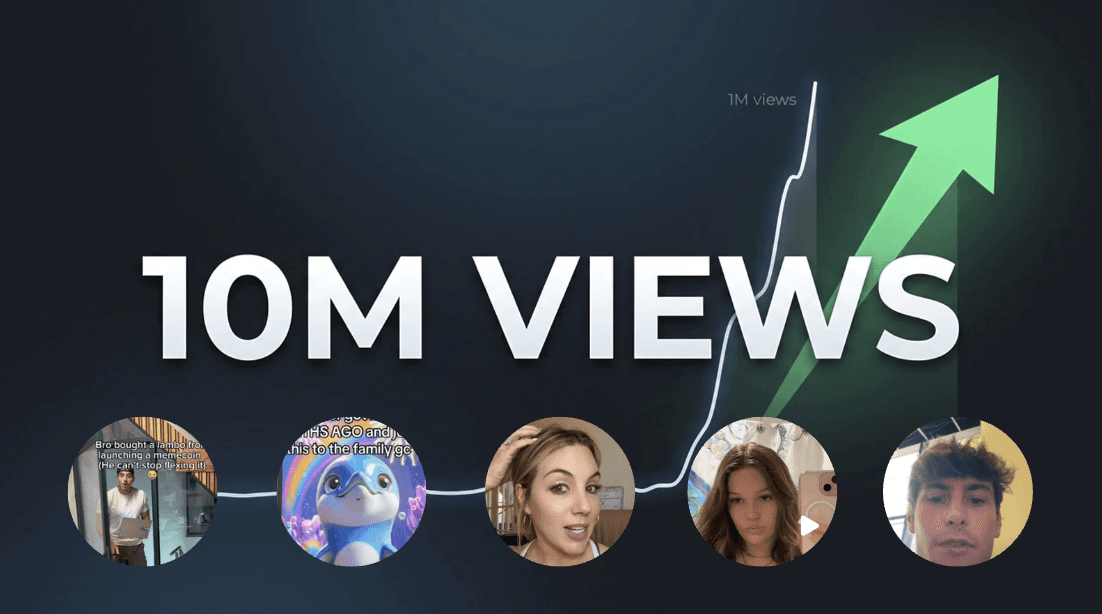
Going viral isn't luck, it’s a science. And like most sciences, it has repeatable principles underneath all the chaos.
The creators we work with at Cult have racked up millions of views across TikTok and Instagram, and when you zoom out and look at what actually worked, the same four things keep showing up:
A hook that grabs attention in the first two seconds,
Content that shows the product's core function in a way people actually care about,
Genuine entertainment value, and a
Delivery that feels natural rather than like an ad.
Below, we've broken down six clips from Cult creators that went mega viral while promoting products.
1. Kristin (@need_spicycubes)
Storytelling That Sells Without Selling
Kristin runs a page built entirely around Spicy Cubes, a wellness product designed to boost mood and sensual experience, and her approach is about as far from a traditional product demo as you can get.
She tells stories. Specifically, she tells entertaining, lesbian-related stories about her personal life that happen to weave in the product organically. A viewer watches her talk through a wild situation, gets entertained, and by the end has a natural curiosity about whatever she mentioned along the way.
She references Spicy Cubes in the middle of an entertaining story without explaining what it is. Then, when the comment comes in asking "what is spicy cube?" she uses that as a launchpad for a follow-up video (right) that answers the question while continuing the story. The payoff is that the second video feels like a response to genuine curiosity rather than an ad, and people are already invested in her story.
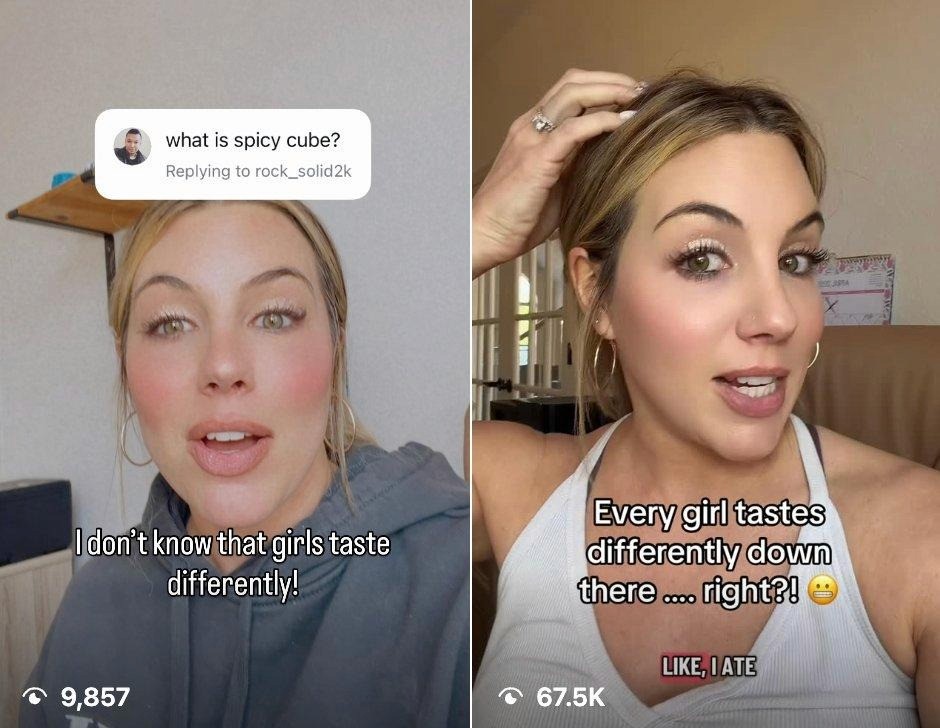
Kristin's two-part story format: plant the seed, then answer the question
This mirrors a broader format that's been quietly working across TikTok: think of creators like Chloe (@chloe.3304), who has gone viral repeatedly for Fincast (a mortgage estimator) by wrapping the product in a relatable financial story.
The product becomes the answer to a problem you were already invested in.
2. Vladi (@ben.pumpfun): Riding a Trend and Funneling It to a CTA
Vladi's approach was different: he spotted a trend around memecoin culture and leaned into it hard.
The memecoin/crypto flex format was already doing big numbers on its own. Vladi made a video showing how easy it is to launch a token on Pump.fun, and then placed the app naturally into the narrative.
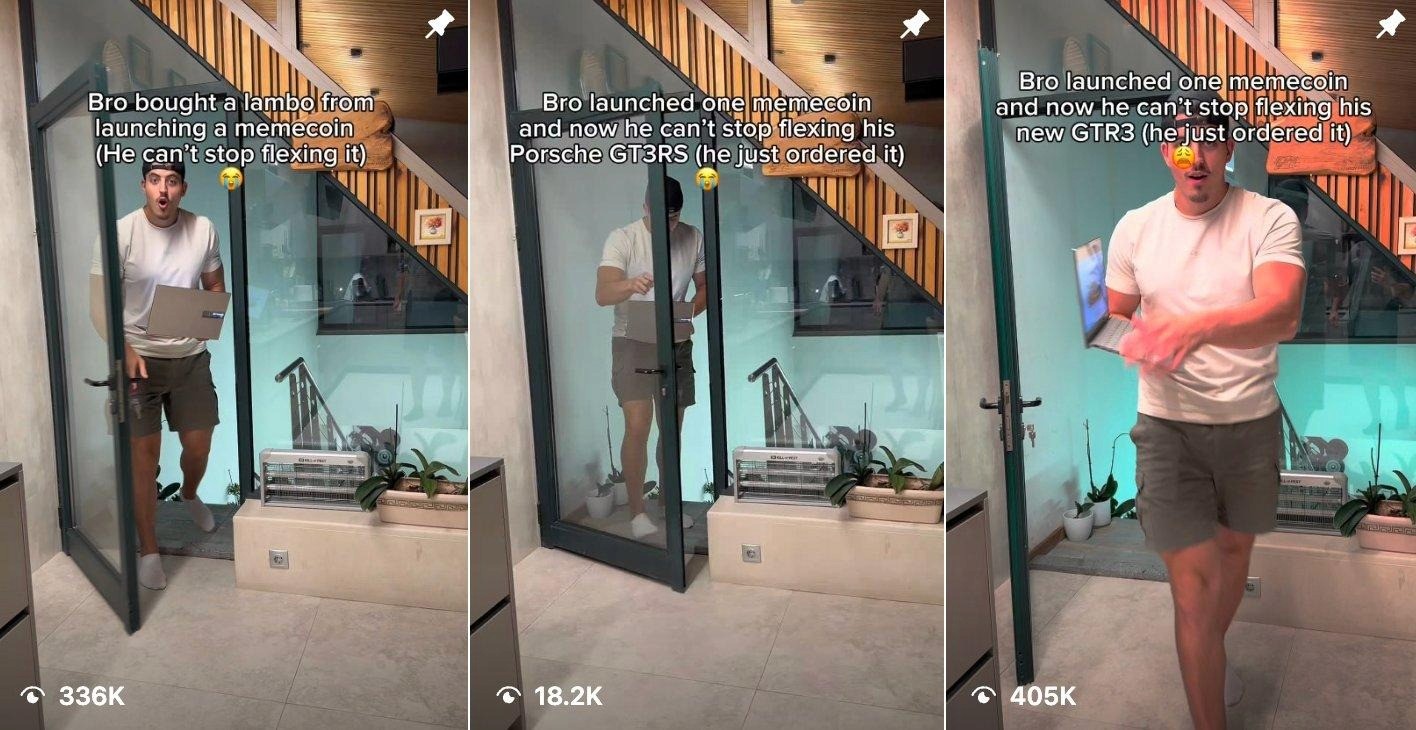
Vladi's memecoin flex series — 405K and 336K views
The 405K view video came from a simple insight: people are fascinated by the idea that regular guys are making money from memecoins, and the comment CTA ("comment App") drove engagement that pushed the algorithm to distribute further.
You can see the full reel here.
3. Dominik (@domsband): The Reveal Format, Done Well
Dominik's viral clip is a textbook example of the reveal format.
He sets up a situation, builds tension or humor around it, and then — right at the moment of payoff — the app appears on screen. In this case, the hook is a dolphin telling him his sister got divorced, which is absurd enough to stop the scroll on its own.
The payoff is the Cantina app popping up at the end of the video in a way that feels like the natural conclusion of the story.
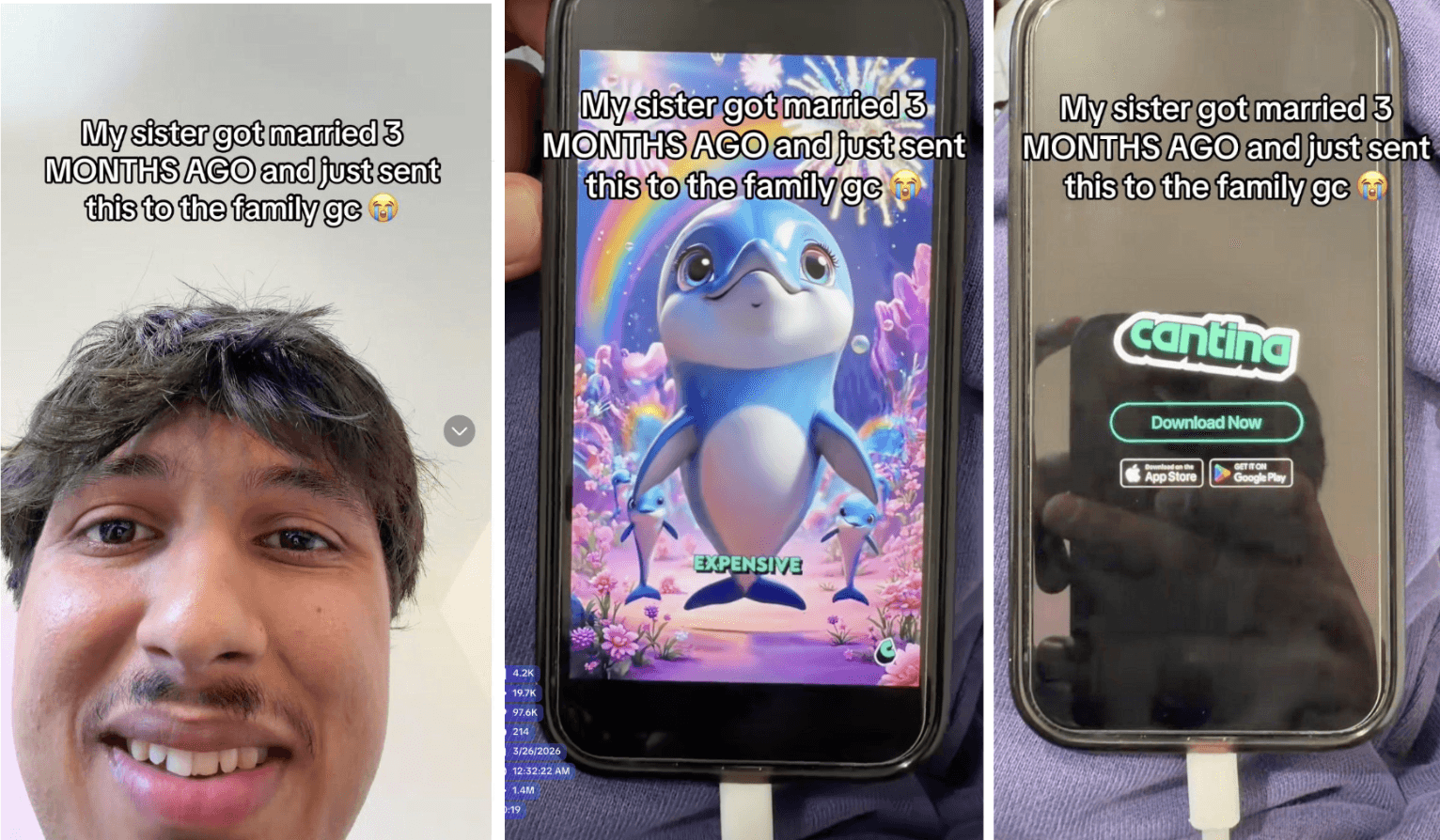
Dominik's hook: absurd enough to stop the scroll. The payoff: Cantina appears as the natural resolution
The video hit 1.4M views. The reason is that it’s a great hook, highly entertaining, and the app placement doesn't feel bolted on.
4. Hayley (@hay.girlhacks): Drama as a Discovery Engine
Hayley's 2.4M view clip is probably the clearest case study in how to use emotional drama as a distribution mechanism. The video is built around catching a cheating husband (a premise that's hard to scroll past) and the product (in this case, the product being advertised, which is how she found out) becomes the mechanism of the story rather than the subject of it.

Hayley's 2.4M view clip — drama as the vehicle, product as the mechanism
The broader principle here scales to almost any product category. If you're promoting a trading app, the drama is a hidden camera catching someone trading with an unfair advantage (your product).
The product has to be the thing that causes the resolution.
Hayley's approach (@hay.girlhacks) does this well because the product is genuinely how the situation got resolved, as it's baked into the story, not appended to it.
5. Max (@careermaximus): Utility Content That Hooks on Relatability
Max's clips around job searching hit 2.7M and 1.1M views with a format that's deceptively simple: he shows a relatable pain point (the job market is brutal, he sent 500 applications in a week), and then demonstrates the app as the obvious solution.
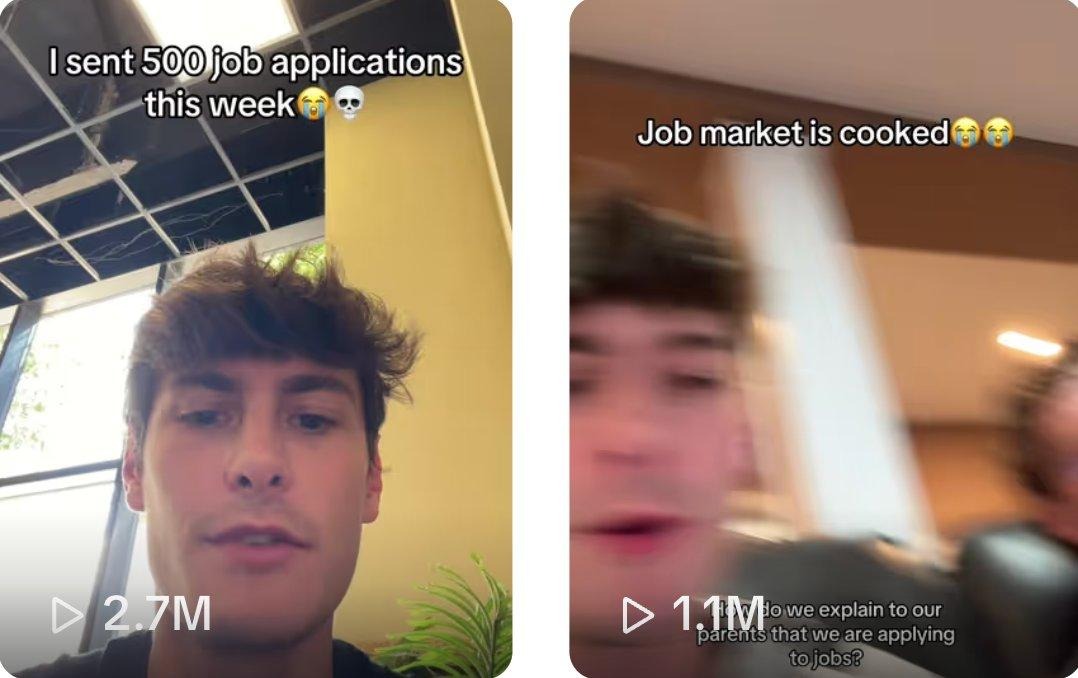
Max's job search content: 2.7M and 1.1M views
The full clip is worth watching at careermaximus on TikTok. What stands out is how natural the transition from hook to product feels. He's not pitching. He's just showing what he used to solve the problem he led with. That's the template: be specific about the pain, be honest about the solution.
What These Five Have in Common
Every one of these clips follows the same basic logic, even though they look completely different on the surface.
They open with something that makes you stop scrolling. They show the product doing something you actually care about, not a feature list, a real outcome. They're entertaining enough that you'd share them without even thinking about the brand.
And none of them feel like ads.
If you’d like to find your viral angle and grow like crazy, let’s chat.
— Cult Media