
Jax Dwyer

Growing Your Consumer Tech App
There are only a few proven channels that actually grow consumer apps. The problem is knowing when to use each one and at what stage of your company's lifecycle they make sense.
We've built growth systems for billion-dollar enterprises and pre-seed startups heading into their first raise. The playbook looks different at each stage, but the channels are the same. Here's how consumer apps are reliably getting millions of users.
The Four Channels (and What You're Really Paying For)
These four channels all involve creators making content about your product, which is why they get lumped together. But the underlying economics are completely different, and understanding that distinction is what separates teams that scale efficiently from teams that burn budget.
UGC Creators produce original short-form content on dedicated channels built around your product. Street interviews, hook-and-demo videos, reaction formats, day-in-the-life angles. Think of them as your content R&D lab. They generate the raw material that tells you what messaging, hooks, and formats actually resonate with real people. You own the content, you own the data, and every video is a test that feeds back into your system.
Clipping takes content that's already working and redistributes it at scale. Your UGC winners, podcast clips, interviews, product demos. Clippers don't create new concepts. They multiply proven ones across hundreds or thousands of accounts for massive organic reach. Payouts are typically tied to performance (views from approved posts), which means creator incentives are aligned with actual results. You're not hoping someone posts. You're paying when content performs.
Paid Ads give you distribution on demand through Meta, TikTok, and YouTube. You control targeting, budget, and pacing. But the creative still has to convert, and that's where most ad accounts bleed money. Every new creative you test costs real dollars, and without a pipeline of proven content feeding your ad account, you're essentially funding expensive guesswork.
Influencer Marketing gives you access to a creator's existing audience and their credibility. You're renting trust. A $10K placement might generate massive engagement or barely register. The risk sits with the brand, the content usually comes with usage restrictions, and reusability is limited. But when you need to break into a specific community where authority matters more than volume, nothing else hits the same way.
How the Best Teams Stack Them
Now here's where it gets interesting. The highest-performing teams we work with don't pick one channel. They stack them in a specific order, and the sequencing is what makes the whole thing compound.
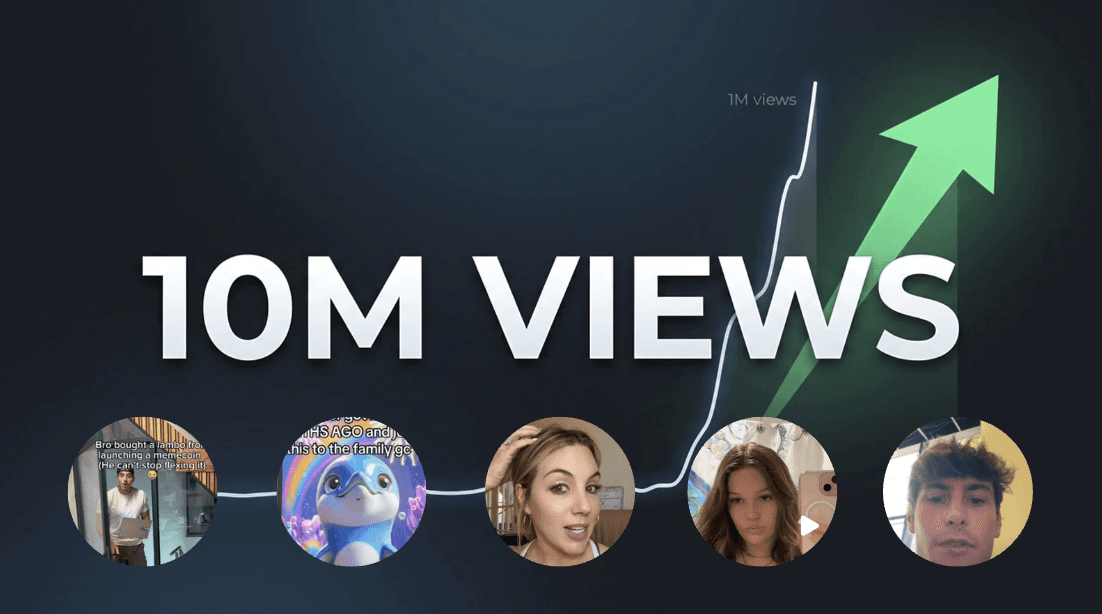
Most of our clients start with UGC creators. You deploy ten to twenty creators posting daily on fresh accounts, testing dozens of hooks, angles, and formats simultaneously. Within weeks, patterns emerge. You learn which messages stop the scroll, which CTAs drive installs, and which formats your audience actually responds to. Most companies try to figure this out with three posts a week. With a proper creator operation you're generating hundreds of data points in the same window.
Once you have winners, you layer clipping on top. Your clipping team takes each top-performing video and creates three to five variations with different hooks, crops, and CTAs. So your hundred best videos become three to five hundred new pieces of content, all with a significantly higher probability of performing. You're not guessing anymore. You're remixing what already works and distributing it across a network that multiplies your surface area. This is where organic reach really starts to compound.
From there, the winners feed into paid. Take your top organic performers and run them as TikTok Spark Ads or whitelist them through Meta. The shift here is fundamental: you're no longer testing creative with ad dollars. You're scaling content that's already proven to work. Teams that make this switch typically see cost per install drop by thirty to fifty percent. Same budget, same targeting, dramatically better results.
And then you activate influencers. By this point you already know which hooks and angles convert. Instead of handing an influencer a generic brief and hoping for the best, you're giving them a proven format that's already driven real results. Their audience and their credibility sit on top of a message that's been validated by thousands of data points. That's a completely different game than just paying someone to post.
Each layer feeds the next. UGC discovers the winners. Clipping scales them organically. Paid amplifies them with budget. Influencers add credibility and community trust. And the system gets smarter and cheaper every cycle because each round gives you more data on what works.
But What If You're Not Ready for All Four?
Not every team needs the full stack on day one. Here's how to think about where to start based on where you actually are.
If you don't know what messaging works yet, start with UGC creators. You don't have a proven hook library. You don't know which angles drive installs. You need volume testing before you can scale anything else. This is always the foundation.
If you already have strong source material, whether that's podcast episodes, product demos, interview clips, or UGC winners, start with clipping. You don't need to create net-new content. You need distribution leverage on what you've already got.
If you already have creative that converts and you just need more volume, start with paid ads. But be honest with yourself here. If you're running paid without a pipeline of validated creative, you're burning budget on R&D that organic could do cheaper and faster.
If your bottleneck is credibility in a specific community, start with influencers. Just make sure you know your message before you pay someone to deliver it. An influencer amplifies whatever you give them, including an unproven pitch that doesn't convert.
The Sequencing Trap
The most expensive mistake we see is teams starting with paid ads or influencers before they've figured out what actually works. They spend $20K on an influencer placement running an unproven message. They dump $50K into Meta testing creative that's never been validated organically. Then they wonder why growth feels expensive and unpredictable.
The fix is sequencing. Organic UGC to discover winners. Clipping to scale them. Paid to amplify them. Influencers to add trust on top of what's already proven. Every step de-risks the next one, and the whole system gets cheaper over time because you're building on what works instead of starting from scratch every campaign.
That's not a campaign. That's a growth engine. And growth engines compound.
Cult Media builds creator-led growth engines for consumer tech, fintech, and Web3 companies. If you need a system that turns content into users.