Jax Dwyer
You're spending $20k, $60k, even $100k or more per month on Meta. Every time you get a new winning fatigue, it ends up dying.
The reason it dies faster now than it used to, the reason your replacements keep flopping, has nothing to do with your media buyer or your budget.
Meta changed something quietly in the background that almost nobody is talking about clearly.
What Andromeda Actually Changed
In mid-2025, Meta fully rolled out an algorithm update internally called Andromeda.
The short version: the system can now process roughly 10,000x more ad candidates at the retrieval stage.
Practically, your ads are no longer competing against a smaller pool. They're competing against everything. The algorithm is exponentially better at matching the right ad to the right person, but only if you give it enough variety to work with.
The old fatigue fix doesn't work anymore.
That playbook went like this: creative fatigues, CPM climbs, results drop, you duplicate the campaign, swap in new creatives that are basically the same angle with a fresh face, relaunch it, costs come back down. Repeat.
That specific move is dead. Meta's system now recognizes surface-level variations of the same message and stops rewarding you for it. It's not regular ad fatigue. It's closer to your account developing an immunity to the fix.
Everyone Is Saying the Same Thing Different Ways
Most teams, when they think "creative diversity," think different creators, different faces, different production styles. That's not what Meta means.
What the algorithm is actually looking for is messaging diversity. Different core reasons someone would buy your product.
Think about it this way. Say you're marketing a dog food brand. You make ten ads, different hooks, different creators, different styles, but every single one of them is fundamentally about healthier ingredients. You've made one ad ten times.
What actually works now is something like:
An ad about healthier ingredients
An ad about your dog living longer
An ad about fewer vet bills
An ad about your dog having more energy
An ad about no dog farts (this performs, seriously)
An ad about a better coat and skin
Each one hits a different psychological trigger. A different reason to care. That's what the algorithm needs to match your product to different people with different problems. Same product. Different reasons to buy it.
Why App Companies Get Hit Hardest
Most app creative teams converge on one or two proven hooks and iterate endlessly. Some version of: here's the problem, here's the solution, here's the CTA. It works until it stops working, and then nothing new seems to break through.
The accounts that stayed stable through the Andromeda rollout weren't making more versions of the same hook. They were asking a different question before writing a single script.
Not "how do we say this better?" but "what are all the different reasons someone would want this?"
For a fitness app that list might be: weight loss, habit building, accountability, competing with friends, looking better for a specific event, reducing joint pain, sleeping better, having more energy at work. Each one of those is a separate ad, different hook, different body, different emotional angle, filmed as one cohesive unit from start to finish.
Swapping hooks onto the same body copy doesn't cut it anymore. The whole ad needs to be built around one reason, all the way through.
Two Ways to Handle It
If you're at serious spend levels, there are two realistic approaches.
The first is volume. Fifty or more creatives per week. Sheer output overwhelms the fatigue cycle. Some ecommerce brands have made this work, but for most app companies it means a complete overhaul of creative infrastructure. It's not realistic for most teams.
The second is diverse messaging. Fifteen to twenty completely unique ads per month, each built around a different core reason someone would want your product, each filmed as a single cohesive unit with hook, body, and CTA all aligned around one angle.
Accounts that took this approach in the second half of 2025 saw no cost inflation during the Andromeda rollout. The algorithm had enough to work with.
What This Actually Means at $60k+ Per Month
At that spend level with 10-12 active creatives, you're not giving Meta enough variety. The algorithm is trying to find pockets in your audience, different people with different reasons to care, and you're giving it one message dressed up slightly differently each time.
If you're rotating 10-12 creatives and your win rate is around 3%, you've got maybe one real winner at any given time. Meta leans on it until it's dead, then you scramble to replace it while CAC climbs.
At 400-600 active ads, where some of the fastest-scaling apps are operating right now, the algorithm finds winning pockets continuously. When one angle fatigues, others pick up the slack. CAC stays lower because no single creative is carrying the whole account.
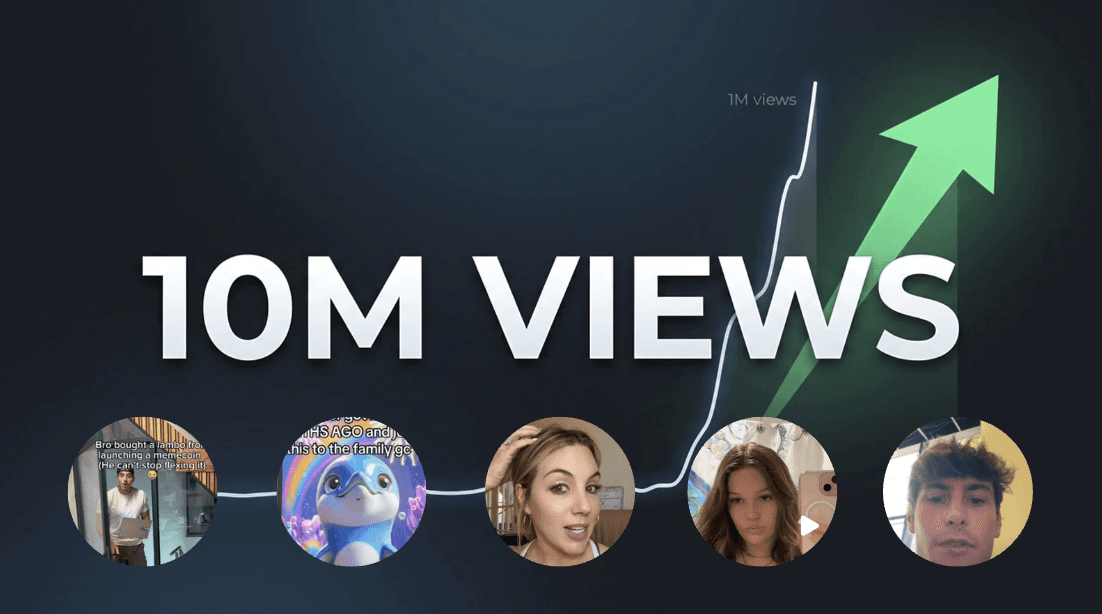
Organic UGC feeding into paid is how you reach that creative velocity without building an internal studio. Every piece of organic content that works is a potential ad. The ones that go viral tell you which angles resonate with cold audiences, which is exactly the signal you need before deciding where to push budget.
A Simple Exercise Before Your Next Brief
Write down your product. Then write down every reason someone would want it. Not features, reasons. The emotional triggers, the problems it solves, the outcomes it creates, the things that make someone stop scrolling and feel like the video is about them.
Get to fifteen, or ideally thirty.
Each one of those is a hook. Each hook is an ad. Film each one start to finish as its own thing, not as a component to be swapped in and out.
If your UGC program is already generating volume, you're ahead of most of the market on raw material. The shift is mostly in how you brief and what angles you're chasing, not starting over from scratch. If you're still iterating on the same two or three angles that worked last year, you're spending money on a strategy that the platform has quietly moved on from.